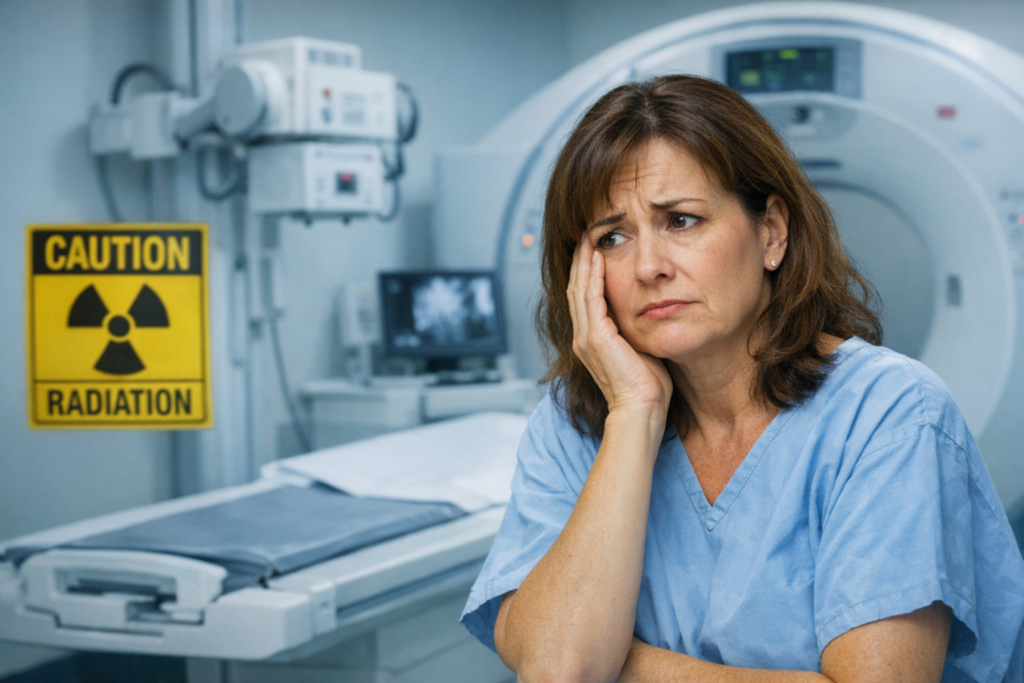
When I see patients in my orthopedic clinic and recommend imaging tests,
these are some of the most common concerns I hear:
“Isn’t radiation bad for your body?”
“Is it safe to get X-rays or CT scans too often?”
Many patients come to the clinic because of pain or injury,
but hesitate to proceed with imaging due to fear of radiation exposure.
In this article, I’ll explain:
- Why X-rays and CT scans are recommended
- How much radiation they actually involve
- Whether repeated imaging is truly dangerous
in a clear, patient-friendly way.
Why Do Doctors Recommend X-rays or CT Scans?
In orthopedic practice, imaging plays a key role in evaluating joint pain and injuries.
- X-rays are useful for evaluating → bone alignment, fractures, and structural deformities
- CT scans use multiple X-ray images taken from different angles → to provide a more detailed, three-dimensional view of bone anatomy, which is especially helpful in fracture cases
While CT scans can show soft tissues such as muscles, discs, tendons, and ligaments,
their resolution for these structures is limited. When detailed evaluation of soft tissue is needed, MRI is usually preferred.
Using X-rays and CT scans allows physicians to:
- make accurate diagnoses
- determine the severity of injury
- plan appropriate treatment or surgery in advance
Is Medical Radiation Really Dangerous?
Many people believe that
“radiation automatically equals cancer risk.”
In reality, medical radiation is strictly regulated,
and the amount of radiation used in diagnostic imaging is very small.
To put things into perspective, let’s compare imaging radiation to everyday exposure.
Typical Radiation Exposure (Approximate)
- Natural background radiation: ~0.01 mSv per day
- Commercial airplane flight (New York ↔ Los Angeles, one-way): 0.03 mSv ~ 0.05 mSv (Radiation exposure increases at higher altitudes due to cosmic radiation)
- Single joint X-ray: ~0.05 mSv
- Joint CT scan (ankle, wrist, knee): ~0.5 mSv
- Radiation level associated with increased cancer risk: ≥100 mSv over a short period
When you compare these numbers,
the radiation from diagnostic X-rays and CT scans is similar to what people receive from normal daily life or frequent air travel.
Importantly, the radiation dose linked to increased cancer risk is hundreds to thousands of times higher than that of standard orthopedic imaging.
What About Getting Imaging Too Often?
This is another very common and understandable concern.
The short answer is:
When imaging is recommended by a physician, it is generally well within safe limits and performed because it is medically necessary.
X-rays and CT scans are ordered only when there is a clear clinical reason, such as:
- confirming a diagnosis
- determining appropriate treatment
- planning surgery
- evaluating changes in symptoms
Avoiding necessary imaging out of fear can actually be harmful.
Without imaging, it is often impossible to accurately diagnose fractures, joint injuries, or internal damage through physical examination alone.
In many cases, the risk of missing an important diagnosis outweighs the minimal radiation risk.
A Final Message From the Clinic
Radiation-based imaging tests are not ordered casually.
They are used:
- only when necessary
- at the lowest effective dose
- to obtain the most useful information
- to guide the safest and most appropriate treatment plan
If you feel uneasy, the best approach is not silent worry, but conversation.
Ask your doctor:
“Why is this test necessary?”
“Are there alternative imaging options?”
Clear communication helps ensure that you feel informed and comfortable with your care.
This article is part of a series explaining how imaging tests are used in orthopedic care.
For a complete overview of imaging tests in orthopedic care, please refer to:
👉 X-ray, CT, MRI, and Ultrasound: What’s the Difference and Why Are There So Many Tests?
Leave a Reply