After spraining the ankle and injuring the ligaments, many patients ask the same questions once the pain begins to improve:
“It feels better now — can I just go back to normal activity?”
“Do I really need rehabilitation exercises?”
“If I skip rehab, will I sprain it again?”
The short answer is:
✔ Just because the pain improves doesn’t mean the ankle has fully recovered. Skipping rehabilitation often leads to repeat injuries.
Why Is Rehabilitation So Important?
Even when pain and swelling improve, the ankle ligaments may not have fully regained:
- Their original strength
- Joint stability
- Balance control
In clinic, we often compare ligaments to a rubber band.
If a rubber band is stretched forcefully, it may not snap, but it often becomes looser afterward.
An ankle ligament behaves similarly. It heals, but it may not return to the exact same tightness as before.
If you return to sports or normal activity too quickly,
the ankle becomes much more likely to roll or sprain again.
So rehabilitation is not just about pain relief.
✔ It helps restore ankle stability
✔ And reduces the risk of future injuries.
Rehabilitation After an Ankle Ligament Injury Happens in Stages
Recovery works best when done step by step.
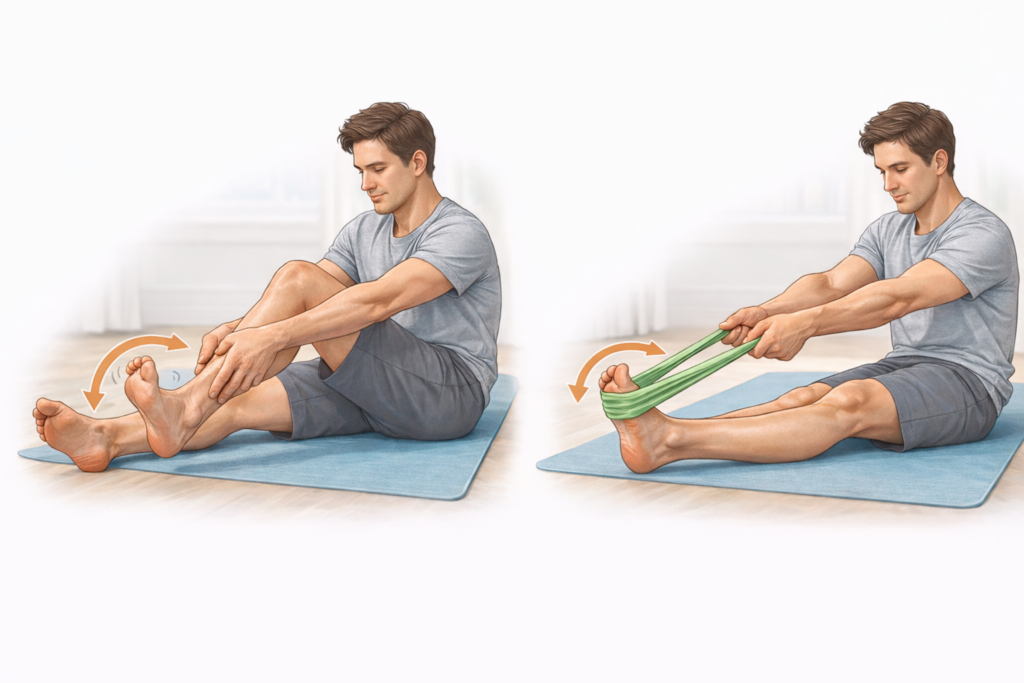
1. Early Stage — Restoring Movement
Once swelling and pain begin to settle, the first goal is restoring normal movement.
This stage includes:
- Gentle ankle range-of-motion exercises
- Stretching to reduce stiffness
The goal at this stage is simply to help the ankle move comfortably again.
Heavy weight-bearing or intense activity should still be avoided.
2. Middle Stage — Strengthening Muscles
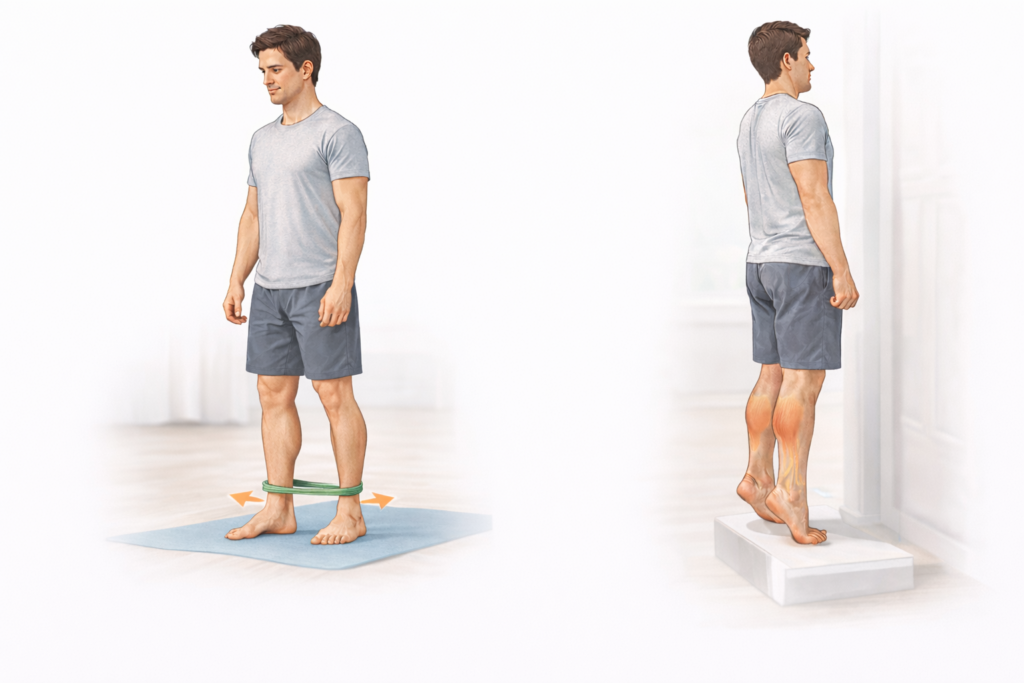
Next comes strengthening.
Exercises focus on:
- Muscles around the ankle
- The calf muscles
- Foot-supporting muscles
Ligaments alone do not stabilize the ankle.
Strong surrounding muscles are equally important.
✔ Muscle recovery plays a major role in preventing another ankle sprain.
3. Late Stage — Balance and Stability Training
This is the stage many people skip, yet it is one of the most important.
Training includes:
- Standing on one leg
- Balancing on unstable surfaces
- Direction-change and agility exercises
The main goal of this phase is preventing future ankle sprains.
This stage is especially important for people who run, hike, or play sports.
How Long Should I Use an Ankle Brace or Taping?
- For daily activities, brace use can gradually decrease once stability improves.
- For sports or outdoor activities, wearing a brace early in recovery can be helpful.
✔ A brace does not replace the ligament — it simply supports recovery while your ankle regains strength.
Warning Signs During Rehabilitation
Be cautious if:
- Pain suddenly worsens
- The ankle frequently feels unstable
- Swelling repeatedly returns
In these situations,
✔ rehabilitation intensity may need adjustment, or
✔ medical evaluation may be necessary.
One Important Thing to Remember
Rest is important after an ankle ligament injury.
But proper rehabilitation is even more important.
An ankle that completes rehabilitation properly usually returns to normal daily activities and sports without long-term problems.
In fact, many patients even say,
✔ “My ankle actually feels stronger now than before the injury.”
Taking rehabilitation seriously today greatly reduces the chance of repeated ankle injuries in the future.
Leave a Reply