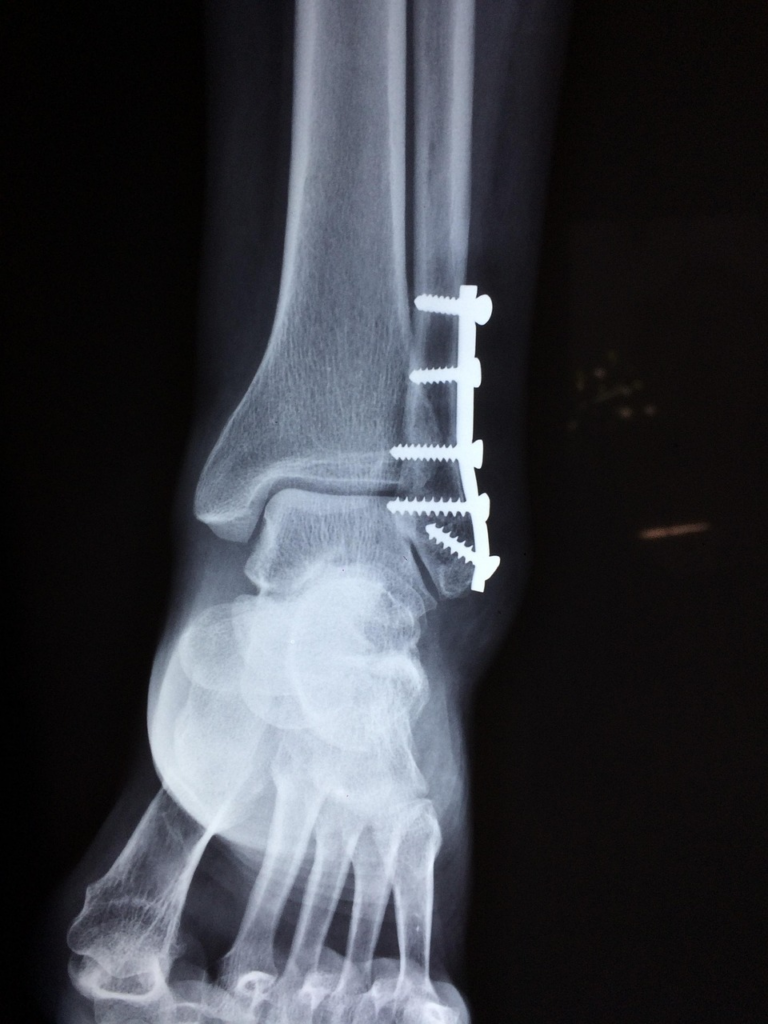
After ankle fracture surgery, many patients ask similar questions while still in the hospital or during follow-up visits.
“When can I start walking?”
“Do I really need rehabilitation?”
“When will it be safe to run again?”
Even if the surgery itself went well,
the recovery process afterward often feels more uncertain and stressful.
Ankle fracture surgery is frequently performed in younger and active individuals,
so many patients are eager to return to daily activities, work, or sports as soon as possible.
In this article, we’ll explain
why rehabilitation is important after ankle fracture surgery,
how rehabilitation typically progresses,
and when running may safely be resumed.
Why Rehabilitation Is Important After Ankle Fracture Surgery
Ankle fracture surgery stabilizes broken bones using plates and screws to restore proper alignment.
However, it’s important to understand that
surgery does not instantly return the ankle to normal.
While the bones are fixed in position,
they still require time to heal and achieve solid bone union.
During this period, patients often wear a cast or brace and limit weight-bearing.
As a result, the muscles around the ankle weaken, and the joint can become stiff.
If activity is increased too quickly without proper rehabilitation,
pain may persist longer, and recovery can be delayed.
This is why rehabilitation must address both bone healing
and restoration of joint mobility, strength, and balance.
What Does Rehabilitation After Ankle Fracture Surgery Look Like?
Recovery timelines vary from person to person,
but most patients follow a general progression.
Early phase (approximately 1–2 weeks after surgery)
- Immobilization with a cast or brace
- Use of crutches with restricted weight-bearing
- Focus on wound care and pain control
Intermediate phase
As follow-up X-rays confirm healing progress,
partial weight-bearing may be gradually introduced under medical guidance.
Gentle ankle range-of-motion exercises are started
to prevent stiffness and maintain joint flexibility.
Later phase
Once bone healing becomes more stable:
- Walking practice with support
- Strengthening exercises for the ankle and lower leg
- Balance and coordination training
At this stage, walking may be possible,
but the ankle often does not feel completely “normal” yet.
Resistance Band Exercises and Balance Training (Later Rehabilitation Phase)
Rehabilitation involves more than simply learning to walk again.
Strengthening the muscles around the ankle and restoring balance are critical to prevent re-injury.
Resistance band exercises help safely strengthen:
- Ankle flexion and extension
- Inward and outward ankle movements
Balance exercises—such as standing on one leg or training on balance pads—
help restore joint stability and reduce the risk of future ankle injuries.
These exercises should always be performed within a pain-free or tolerable range and under the guidance of a healthcare professional.
So, When Can You Start Running?
This is often the most common and most important question.
The honest answer is that
running usually resumes later than many patients expect.
In general:
- Light jogging may be considered around 3–4 months after surgery
- Running that involves jumping, quick direction changes, or sports
is usually delayed until 4–6 months after surgery
However, time alone is not enough.
Before running, several conditions should be met:
- Minimal or no pain during walking
- Adequate ankle range of motion
- Sufficient strength and balance
- Stable bone healing confirmed on X-ray or CT imaging
Only when these criteria are satisfied can running be resumed safely.
If your ankle pain is caused by a ligament injury rather than a fracture, you may find this guide helpful →
👉 What Rehabilitation Exercises Are Best After an Ankle Ligament Injury?
Rehabilitation is one of the most important phases after fracture surgery.
To understand how exercise, daily activities, pain control, and swelling all fit together during recovery, you may find this complete overview useful:
👉 Postoperative Orthopedic Care: What You Really Need to Know
Practical Advice From the Clinic
The most important qualities during ankle fracture recovery are
patience and consistency.
Bone healing takes time, and regaining ankle strength and function
often requires four months or more.
Avoiding all movement out of fear can actually slow recovery,
while pushing too hard too early increases the risk of setbacks.
The safest approach is gradual, structured rehabilitation—
starting with gentle motion and partial weight-bearing,
then progressing step by step as pain allows and healing advances.
Orthopedic surgery restores the bone,
but the recovery of ankle function depends largely on the patient’s commitment to rehabilitation.
Taking recovery one step at a time—rather than rushing—
usually leads to the safest and fastest return to normal activity.
Leave a Reply