Why do bones break so easily after a minor fall?
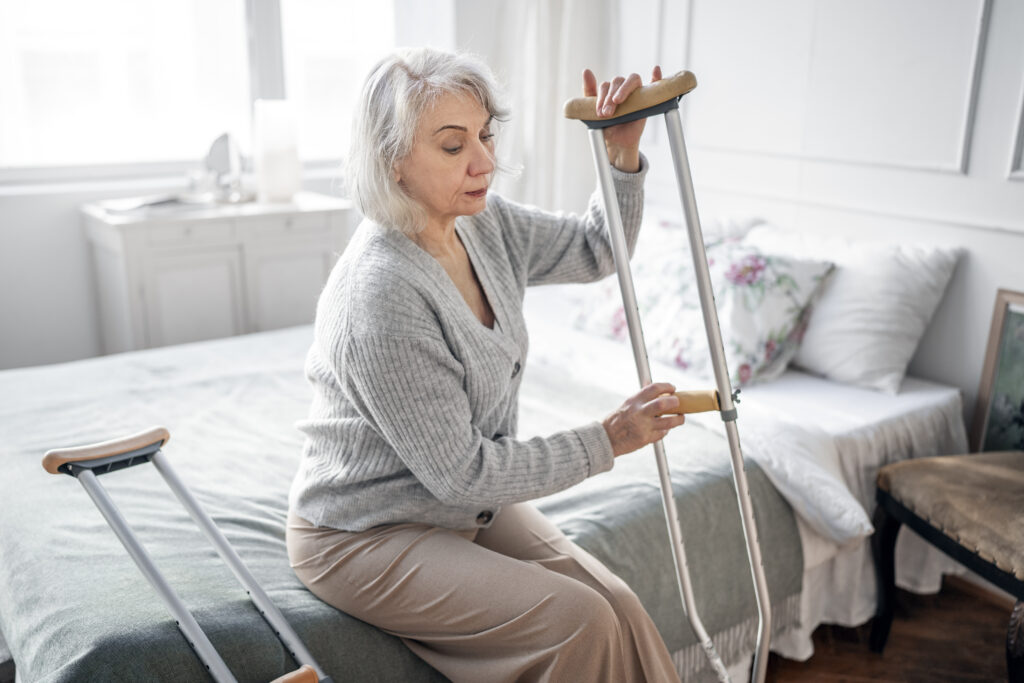
As our society continues to age, the number of older adults is increasing rapidly — and so is the number of fractures seen in elderly patients.
In daily orthopedic practice, one pattern appears again and again:
many older adults sustain fractures after very minor trauma.
From a family’s perspective, this often comes as a shock.
“She just slipped on ice, and her wrist is broken.”
“He only sat down suddenly — but they said his spine fractured.”
“After falling near the bed, she suddenly couldn’t walk anymore.”
In younger individuals, fractures usually require high-energy trauma such as car accidents or sports injuries.
However, in older adults, even a small fall or simple movement can result in a fracture.
These injuries are collectively referred to as geriatric fractures.
What makes them especially important is not just the broken bone itself —
but their profound impact on mobility, independence, and quality of life.
Early recognition and appropriate treatment are essential.
Why Are Geriatric Fractures So Common?
The primary underlying reason is osteoporosis.
Osteoporosis
As we age:
- Bone mineral density gradually decreases
- Muscle mass declines
- Internal bone structure becomes fragile — similar to a sponge
Although bones may appear normal from the outside, their internal strength is significantly reduced.
In this condition:
- A minor fall
- Sitting down abruptly
- Or sometimes even no clear trauma at all
can lead to insufficiency or compression-type fractures.
This is especially common in postmenopausal women, where decreased estrogen accelerates bone loss.
That is why many elderly patients present to clinics or emergency rooms after what seems like a trivial incident — yet imaging reveals a fracture.
Common Types of Geriatric Fractures
Certain fracture locations are particularly frequent in older adults.
Below are the most commonly encountered types in clinical practice.
1. Hip Fracture
Hip fracture is one of the most serious geriatric fractures due to its strong association with loss of mobility.
It usually occurs when an elderly person:
- Slips indoors or outdoors
- Falls sideways
- Lands directly on the hip
Key features
- Severe pain
- Inability to stand or walk
- Often requires hospitalization
Without timely surgery and proper rehabilitation, hip fractures may lead to:
- Pneumonia
- Pressure ulcers
- Severe muscle wasting
- Long-term dependence
For this reason, early surgical treatment followed by aggressive rehabilitation is critical to restoring walking ability and preventing long-term complications.
2. Vertebral Compression Fracture
This is the most common osteoporotic fracture in older adults.
It may occur after:
- Lifting a heavy object
- Bending forward suddenly
- A minor fall
Typical features
- Pain that begins like a “simple back strain”
- Gradual worsening of pain
- Loss of height or progressive kyphosis
Many cases can be managed with:
- Bracing
- Pain control
- Activity modification
However, additional treatment may be required when:
- The fracture is unstable
- Neurologic symptoms occur (weakness, numbness)
- Pain remains severe despite conservative treatment
3. Distal Radius Fracture (Wrist Fracture)
This is one of the most common fractures after slipping on ice.
When falling, people instinctively extend their arms —
and body weight is transmitted directly to the wrist.
Characteristics
- Often the earliest sign of osteoporosis
- Many cases heal well with casting
- However, elderly patients have a higher risk of redisplacement
A crucial clinical point:
A wrist fracture in an older adult is often the first warning sign of osteoporosis.
Even if the fracture heals well, bone density evaluation is strongly recommended —
as this can help prevent future spine or hip fractures, which carry far more serious consequences.
4. Sacral Insufficiency Fracture
This fracture is less well known but frequently overlooked.
Features
- Deep buttock or pelvic pain
- Pain when standing or sitting
- Often no clear trauma history
- May not be visible on plain X-rays
Many patients are initially told “nothing is wrong,”
until MRI confirms the diagnosis.
In elderly patients with osteoporosis and unexplained pelvic or buttock pain,
sacral insufficiency fracture should always be considered.
Fortunately, most cases improve with proper osteoporosis treatment and activity modification.
Key Principles in Treating Geriatric Fractures
Treatment is not just about bone healing.
The true goals are:
- Restoring pre-injury mobility through rehabilitation
- Preventing the next fracture by treating osteoporosis
I once treated two patients who underwent the same hip fracture surgery.
One began walking with assistance just three days after surgery.
The other avoided rehabilitation and remained mostly bedridden.
Months later, their X-rays looked identical — the bones had healed well in both.
But functionally, their outcomes were completely different.
One walked into the clinic independently.
The other arrived in a wheelchair.
The difference was not the surgery —
it was rehabilitation.
A Message for Families
When a parent suffers a fracture, the first thoughts are often:
“Will they ever walk again?”
“Do they need surgery?”
Not every geriatric fracture leads to permanent disability.
What truly matters is:
- Accurate diagnosis
- Appropriate treatment for the specific fracture
- Active participation in rehabilitation
- Proper management of osteoporosis
When these steps are followed carefully,
many elderly patients are able to return to their previous daily lives.
Leave a Reply