Is a Cast Enough? Do I Really Need Surgery?
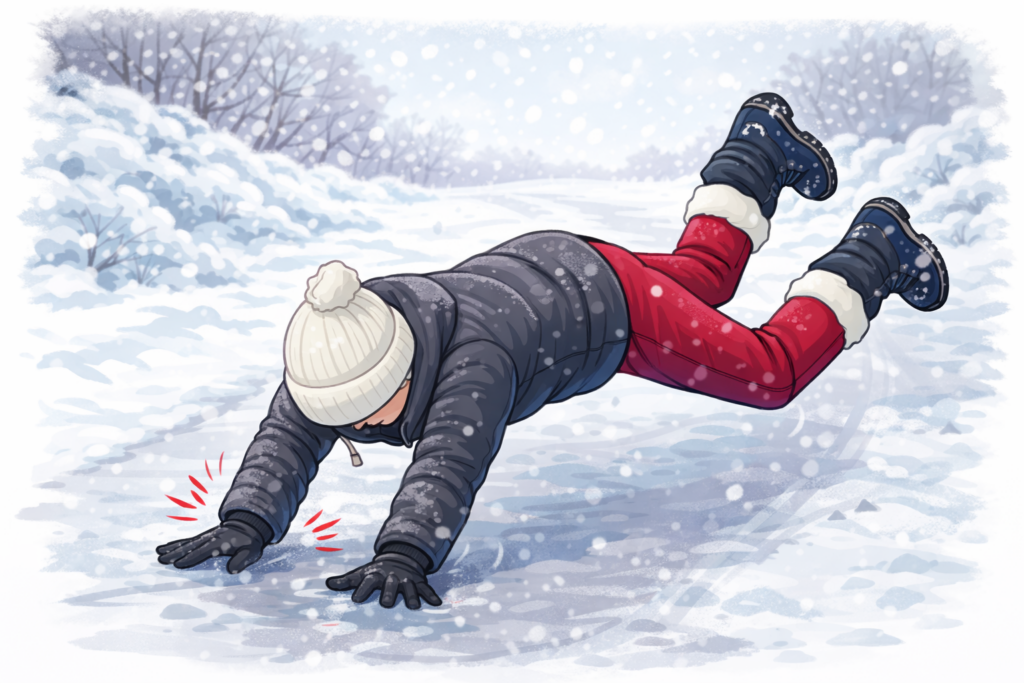
Slipping on an icy road happens in a split second.
One moment you are walking,
and the next moment your body instinctively reaches out to the ground to prevent a fall.
After that, severe wrist pain begins —
and at the hospital, you hear an unexpected diagnosis:
“You have a wrist fracture.”
For many patients, this moment is frightening.
Questions immediately come to mind:
- “Will a cast be enough?”
- “Do I really need surgery?”
- “What if the bone doesn’t heal properly and my wrist never feels the same again?”
Hearing the word fracture often makes people assume the worst.
Fortunately, not all wrist fractures require surgery.
Why Wrist Fractures Commonly Occur After Slipping on Ice
When people slip on icy ground,
they almost always try to break the fall by extending the hand.
At that moment, the entire body weight is transmitted directly to the wrist.
This sudden force can cause a fracture of the distal radius, known as a
distal radius fracture, which is one of the most common fractures seen during winter months.
Not Every Wrist Fracture Requires Surgery
Treatment depends largely on the shape and stability of the fracture.
In many cases, cast immobilization alone is sufficient when:
- there is minimal displacement of the bone
- proper alignment is achieved after reduction
- the fracture does not involve the joint surface
(Reduction refers to the process of manually realigning the fractured bone.)
Stable fractures tend to maintain alignment after reduction,
while unstable fractures may shift again despite casting.
For stable injuries, a cast is typically worn for 4 to 6 weeks,
with regular X-ray follow-up to ensure the bone is healing properly.
If the Fracture Occurred After a Minor Fall —
Osteoporosis Should Also Be Evaluated
In older adults, a wrist fracture should not be viewed as “just an accident.”
When a fracture occurs after relatively minor trauma,
underlying osteoporosis is very commonly present.
In fact, wrist fractures are often considered one of the earliest warning signs of osteoporosis.
Even if the wrist heals well with cast treatment,
a bone density test is strongly recommended.
Identifying and treating osteoporosis early can significantly reduce the risk of future fractures,
including spinal fractures and hip fractures, which can have much more serious consequences.
When Is Surgery Necessary?
Surgical treatment may be recommended when:
- significant displacement remains after reduction
- the fracture cannot be maintained in proper alignment with a cast
- the joint surface is involved
(which may lead to arthritis or poor healing if untreated) - numbness or tingling suggests nerve or vascular compression
In such cases, casting alone may not provide adequate stability.
Surgery using plates or pins may be required to restore alignment.
The goal of surgery is not simply to heal the bone —
but to preserve wrist motion, strength, and long-term function.
Important Points to Know During Cast Treatment
If cast treatment is chosen:
- X-rays are typically repeated within the first 1–2 weeks
to ensure the fracture has not shifted. - A temporary splint is often applied initially,
followed by a full cast once swelling decreases.
You should return to the hospital immediately if you experience:
- increasing finger numbness
- excessive swelling or color changes in the hand
- severe pressure or pain inside the cast
These symptoms may indicate excessive compression,
which can lead to nerve or circulation problems if not addressed promptly.
A Message for Patients and Family Members
Being told that you have a wrist fracture can be alarming —
especially after what seemed like a simple fall.
However, many wrist fractures heal very well
with cast treatment alone.
The key is not choosing the most aggressive treatment,
but choosing the most appropriate treatment for the specific fracture pattern.
Careful follow-up, proper imaging, and individualized decision-making
are what ultimately lead to the best recovery.
There is no single correct answer for every patient —
only the right answer for your wrist and your situation.
Leave a Reply