How Is an Ingrown Toenail Treated?
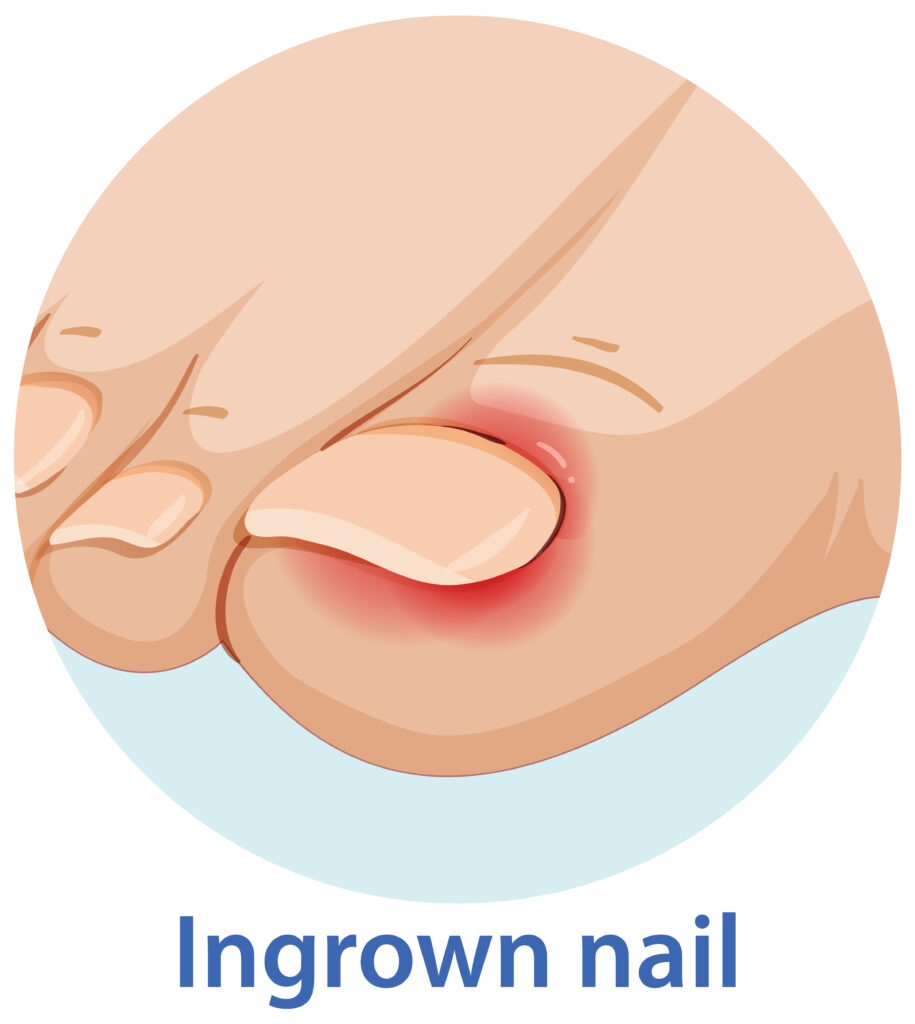
In daily clinical practice, many patients visit the clinic because their toenail has become red, swollen, and painful.
“My toenail keeps digging into the skin.”
“It hurts every time I wear shoes.”
“Can I just trim it myself?”
At first, most people assume they simply cut the nail the wrong way and try to manage it on their own.
However, as pain and inflammation worsen, they eventually seek medical care.
This condition—when the edge of the toenail grows into the surrounding skin and causes pain and inflammation—is known as an ingrown toenail.
What Is an Ingrown Toenail?
An ingrown toenail occurs when the side of the nail penetrates the surrounding skin, leading to inflammation and pain.
It most commonly affects the big toe and may be accompanied by:
- Pain around the nail
- Swelling and tenderness
- Drainage or pus
- Significant pain when walking or wearing shoes
In the early stage, symptoms may feel like mild discomfort.
When inflammation repeatedly develops, however, pain can progressively worsen and interfere with daily activities.
Why Do Ingrown Toenails Develop?
Ingrown toenails are not caused solely by improper nail trimming.
In most cases, several factors contribute together:
- Cutting nails too short or rounding the edges
- Tight shoes, boots, or safety footwear
- Repeated pressure on the toes
- Inherited nail shape
- Sports activity or prolonged walking
This condition is especially common among soldiers, athletes, and people whose jobs require long hours of standing.
During my time working as a military physician, I frequently saw recruits come in with severe big-toe pain caused by ingrown toenails.
The combination of rigid military boots and a sudden increase in physical activity—such as long marches—often made previously mild symptoms significantly worse.
Signs That Suggest an Ingrown Toenail
- Pain limited to one side of the nail
- Redness and swelling around the nail fold
- Sharp pain when wearing shoes
- Overgrowth of soft tissue along the nail edge
- Recurrent drainage or pus
If left untreated at this stage, inflammation may deepen and recovery can take considerably longer.
Do Ingrown Toenails Always Require Surgery?
This is the question patients ask most often.
The answer is reassuring:
✔ Not all ingrown toenails require surgery.
Treatment depends on the severity of symptoms and the degree of inflammation.
1. Early-Stage Ingrown Toenail — Non-Surgical Treatment
When inflammation is mild, symptoms often improve with conservative care, including:
- Nail bracing or corrective devices
- Education on proper nail-trimming techniques
- Local cleansing and infection control
- Avoiding tight footwear
When treated early, many patients experience significant relief without any surgical procedure.
2. Recurrent Inflammation — Local Treatment
More active treatment may be needed when:
- Pain repeatedly returns
- Inflamed tissue grows excessively around the nail
- Drainage or pus occurs frequently
In these situations, local treatment is performed to reduce inflammation.
This involves removing inflamed tissue and trimming the portion of the nail that presses into the skin, thereby relieving pressure.
The goal of this step is to calm the active inflammation and relieve pain.
3. Repeated Recurrence — Partial Nail Procedure
When symptoms continue to recur despite local treatment, a partial nail procedure or nail matrix treatment may be recommended.
This approach:
- Does not remove the entire nail
- Targets only the problematic portion
- Helps reduce the risk of recurrence
Most patients recover relatively quickly.
However, in some cases, mild changes in nail shape may occur, which should be discussed before the procedure.
Can I Treat It at Home?
Attempting to dig out or deeply cut the nail on your own can worsen inflammation and increase infection risk.
If pain becomes severe or the surrounding skin appears red, swollen, or warm,
professional evaluation is strongly recommended rather than self-treatment.
Key Points to Remember
- Ingrown toenails are common but can become chronic if ignored
- Early treatment often prevents the need for surgery
- Recurrent or infected cases may require procedural treatment
- Self-cutting frequently worsens the condition
Although toenail pain may seem minor, it can significantly affect walking and daily life.
If symptoms persist, seeking evaluation by an orthopedic specialist can help ensure safe and appropriate treatment.
Leave a Reply