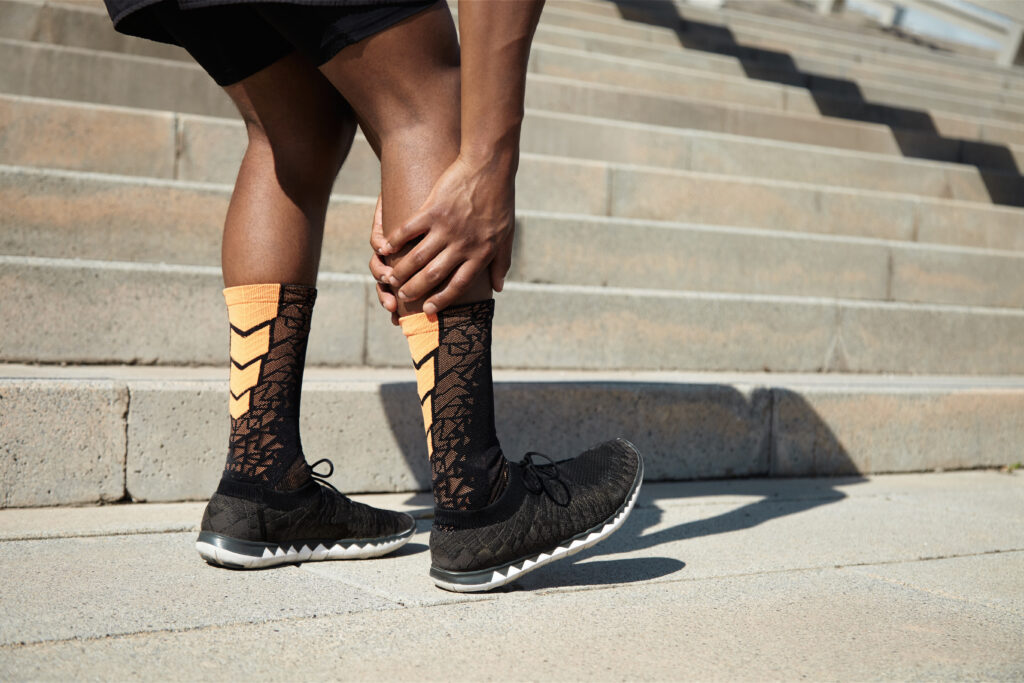
Shin pain after running is common, and most of the time it is NOT a stress fracture.
In fact, the majority of runners with shin pain have shin splints caused by overuse. Stress fractures are less common and typically cause very localized pain that hurts even during walking. Knowing the difference can help determine whether rest is enough or medical evaluation is needed.
With the growing popularity of running and marathons, more people are increasing their training intensity or returning to exercise after long breaks. In clinical practice, this has led to more patients visiting the clinic with similar concerns.
Many say things like:
“I’ve been running more than usual lately.”
“My shin hurts when I press on it.”
“Could this be a stress fracture?”
Because the word “fracture” sounds serious, it naturally causes anxiety. Many patients worry that any shin pain must mean a fracture and often request X-rays or additional imaging.
However, in the majority of cases, imaging studies are normal. Most shin pain in runners is not caused by a fracture, but by repetitive stress on the lower leg. In everyday clinical practice, the most common diagnosis is shin splints.
Shin Pain Self-Check (At Home)
You can use these simple checks:
✔ Pain over a wide area → more likely shin splints
✔ Pain in one exact spot → possible stress fracture
✔ Pain only after running → usually overuse
✔ Pain while walking → warning sign
✔ Pain improving with rest → usually not a fracture
This does not replace a medical exam, but it can be a helpful guide.
Why does shin pain develop after running?
Shin pain after running is most often caused by overuse.
It typically develops when the lower leg is exposed to repetitive stress without enough recovery time.
Common contributing factors include:
- A sudden increase in running distance or frequency
- Training on consecutive days without adequate rest
- Repeated running on hard surfaces
- Wearing worn-out or poorly cushioned shoes
- Returning to exercise after a prolonged break
In these situations, the bone itself is usually not broken.
Instead, repeated traction and impact irritate the muscles and periosteum surrounding the tibia, leading to pain.
The most common cause: Shin splints
The most frequent cause of post-running shin pain is shin splints.
Medically, this condition is referred to as
medial tibial stress syndrome (MTSS).
It develops when repetitive loading during running places continuous stress on the tissues attached to the shin bone.
Typical symptoms of shin splints
- A dull, aching pain along the inner or front portion of the shin
- Pain spread over a broad area rather than one specific point
- Symptoms that worsen after running
- Partial improvement with rest
- Diffuse tenderness when pressing along the shin
This pattern of pain is much more consistent with shin splints than with a stress fracture.
When should a stress fracture be suspected?
A stress fracture is a small crack in the bone caused by repeated mechanical overload.
However, its pain pattern usually differs from that of shin splints.
Typical features include:
- Pain localized to one very specific spot
- Sharp pain when pressing directly on that area
- Pain that persists even during walking
- Symptoms that do not improve with rest
- Gradual worsening over time
By comparison,
pain that is spread out and improves with rest is less likely to represent a fracture.
Shin splints vs stress fracture — key differences
| Symptom | Shin Splints | Stress Fracture |
|---|---|---|
| Pain area | Broad, spread out | One exact spot |
| Pain type | Dull ache | Sharp pain |
| Pain when walking | Rare | Common |
| Effect of rest | Improves | Little improvement |
| Risk severity | Lower | Higher |
Do imaging tests always need to be done?
In many cases, shin splints can be diagnosed through
a detailed medical history and physical examination alone.
However, imaging studies such as X-ray or additional tests may be considered when:
- Pain persists for more than two to three weeks
- Symptoms fail to improve despite adequate rest
- Pain becomes increasingly localized
- Walking itself becomes painful
In such cases, further evaluation is important to rule out a stress fracture.
In clinical practice, there are occasional cases in which initial X-rays appear normal,
but symptoms continue to worsen or become more focal despite rest and conservative treatment.
When a stress fracture is suspected, additional imaging such as MRI may reveal bone marrow edema or early stress-related changes that are not visible on plain X-rays.
Fortunately, when identified early, most of these cases can be treated successfully without surgery, using activity modification, temporary immobilization, and limited weight-bearing.
For this reason, if shin pain persists, becomes localized, or fails to improve over time, a follow-up evaluation by an orthopedic specialist is strongly recommended.
If a stress fracture progresses and is not addressed early,
the recovery period can become significantly longer,
and in rare cases, surgical treatment may be required.
FAQ
Can shin splints turn into a stress fracture?
Yes. If repetitive stress continues without enough rest, shin splints can progress into a stress fracture.
How long does shin pain usually last?
Most cases of shin splints improve within a few weeks with rest and gradual return to running.
Should I keep running with shin pain?
Running through pain can worsen the condition. Reducing activity until symptoms improve is usually recommended.
A Final message from the clinic
Most cases of shin pain that develop after running are not stress fractures.
Instead, they are most commonly caused by shin splints.
Especially when:
- Training volume has recently increased
- Pain is spread across a wide area
- Symptoms improve with rest
✔ Shin splints are the most likely explanation.
Early recognition and proper training modification can prevent symptoms from worsening.
With appropriate load reduction and sufficient recovery time,
most patients improve without surgery or invasive treatment.
However, if pain becomes localized, progressively worsens, or fails to improve despite rest and medication,
evaluation by an orthopedic specialist and appropriate imaging are strongly recommended.
For a broader overview of foot and ankle pain patterns—including bone, tendon, ligament, and soft tissue causes—see the main guide here:
Foot and Ankle Pain: Common Causes Explained
Leave a Reply